Whimsy & Wagging Tails: Using Watercolor Dog Clipart
Every creative professional knows the struggle: you have a solid layout, a clean color palette, and a clear message, but the final result feels a bit sterile. It lacks warmth. It lacks that human touch. Enter the Watercolor Funny Dogs Clipart Puppies collection. This isn't just another set of stock images; it is a toolkit for injecting immediate personality and emotional resonance into your projects. As a designer who constantly battles "cold" digital aesthetics, I find that incorporating hand-crafted elements like these watercolor illustrations is the fastest way to bridge the gap between professional polish and approachable charm.
The Visual Language of Watercolor
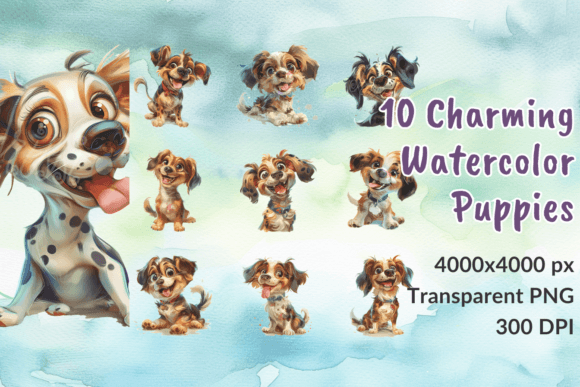
Understanding the asset you are working with is the first step toward effective design. The Watercolor Funny Dogs Clipart Puppies set consists of 10 distinct illustrations, but the magic lies in the medium. Watercolor is inherently organic. Unlike vector art, which can sometimes feel rigid or overly corporate, watercolor bleeds, blends, and possesses texture. These specific illustrations capture the "happy accidents" of the medium—soft edges, pigment pooling, and vibrant color washes that feel handmade.
The "funny" aspect is crucial here. We aren't looking at stiff, show-dog poses. These are playful puppies—spotted, floppy-eared, smiling, and wide-eyed. This specific visual personality communicates joy and innocence. When you use these assets, you are borrowing that emotion for your own work. The high resolution (4000 x 4000 px at 300 DPI) means you aren't sacrificing quality for character. You can blow one of these pups up for a large print banner or shrink it down for a favicon, and the detail remains crisp. However, it is the transparent background that offers the true versatility, allowing you to drop these dogs onto dark textures, busy patterns, or clean white space without awkward white boxes or clumsy cropping.
Strategic Applications: Beyond "Cute"
While the aesthetic is undeniably cute, applying these assets effectively requires a strategic mindset. We need to look past the surface and see how this style influences brand perception and audience engagement.
Elevating Brand Identity
For businesses in the pet industry—groomers, walkers, boutique food brands—the Watercolor Funny Dogs Clipart Puppies are an obvious fit. But don't limit yourself. If you are a life coach, a therapist, or a children’s author, these illustrations work wonders. They soften your brand identity. In a world of aggressive marketing, a smiling puppy disarms the viewer. It lowers their defenses. It suggests that your brand is friendly, trustworthy, and perhaps doesn't take itself too seriously. Use a puppy illustration as a mascot on your "About Me" page to humanize your corporate presence.
Digital & Print Versatility
These assets are optimized for both digital and print mediums. In the digital space, consider using them for social media graphics. An Instagram post featuring a funny puppy against a pastel background with bold typography is stop-scrolling gold. For email marketers, placing a small puppy near the "Subscribe" button can actually increase click-through rates by drawing the eye and eliciting a subconscious positive response.
In print, the applications are endless. I’ve seen designers use similar assets in packaging design for artisanal goods, creating a "farm fresh" vibe even if the product isn't food-related. They are also perfect for editorial design—think magazine spot illustrations or blog headers that need to break up long blocks of text. If you are designing invitations for a birthday party or a pet-friendly wedding, these illustrations provide a custom look without the cost of hiring an illustrator for a one-off project.
Design Mechanics: Pairing and Hierarchy
When you introduce an illustration like the Watercolor Funny Dogs Clipart Puppies into a layout, you must consider how it interacts with your typography. This is where the art of font pairing comes into play.
Typography and Contrast
Because the watercolor style is organic, soft, and slightly irregular, it pairs beautifully with typefaces that offer structure. A clean sans serif font works exceptionally well here. The geometric precision of a modern sans serif creates a pleasing contrast to the fluid nature of the watercolor wash. Think of it as the anchor that grounds the whimsy.
Conversely, if you want to lean into the "handmade" aesthetic, you could pair these puppies with a script font or a handwritten font. However, proceed with caution. If the script is too ornate or the handwriting too messy, the design becomes illegible. Look for a premium font that offers a relaxed but legible baseline. The goal is visual hierarchy: the puppy grabs attention, and the text delivers the message clearly.
Readability and Composition
One common mistake is letting the clipart dominate the text. Treat the Watercolor Funny Dogs Clipart Puppies as supporting actors, not the lead, unless you are creating a poster where the image is the content. In text-heavy layouts, use the illustrations as "spot art" in the margins or as breakers between sections. Because they have transparent backgrounds, you can layer them slightly behind text if you reduce the opacity, creating a subtle watermark effect that adds depth to your web design or print layouts without hindering readability.
Practical Implementation Tips
Before you drag and drop these files into your project, here is a practical checklist to ensure you get the most out of this bundle.
- Evaluate the Palette: The watercolor dogs come with their own coloring. Look at the dominant hues in the puppy illustration and sample those colors for your text or background accents. This creates color harmony and ensures the illustration feels integrated rather than pasted on.
- Check the Edges: While the files have transparent backgrounds, always zoom in to 200% to check the edges. Depending on your software and background color, you might need to do a tiny bit of masking to ensure the blend is seamless.
- Licensing for Merchandise: If you plan to use these for commercial use—such as printing them on t-shirts, mugs, or tote bags—double-check the licensing terms. Since these are original illustrations, they are valuable design assets. Ensure your license covers the manufacturing of physical goods if that is your goal.
- Monochromatic Conversion: If you are working with a strict brand color palette (e.g., black and white), don't be afraid to desaturate the images. A watercolor texture looks stunning in grayscale. It retains the artistic quality while fitting your color constraints.
Conclusion: The Joy of Design
Design can sometimes feel overly technical, bogged down by grids, hex codes, and kerning. Incorporating assets like the Watercolor Funny Dogs Clipart Puppies is a reminder of why we do this. It brings a smile to the viewer's face. It injects life into a static layout. Whether you are a graphic designer working on a client project, a small business owner building a website, or a crafter making invitations, these illustrations offer a quick, high-quality way to communicate warmth and personality. They are more than just pictures of dogs; they are tools for connection.